From salade niçoise to grand aïoli, by way of cappon magro
Raw and cooked vegetables, between Nice, Liguria and Provence.
Tomatoes, garden vegetables, olives, fish and eggs. The ingredients recur, but cooking methods, textures and dressings change.
Six preparations brought together as kitchen notes, without suggesting a historical sequence. Salade niçoise and cundigiun have local identities; nizzarda here means the widespread version with potatoes and green beans. Cundigiun made with boiled vegetables recalls a dish eaten in Liguria in winter. In cappon magro, the same elements are arranged in layers, supported by ship’s biscuits and bound together by salsa verde. Grand aïoli takes us back to Provence: cooked vegetables, salt cod and a garlic sauce to share.
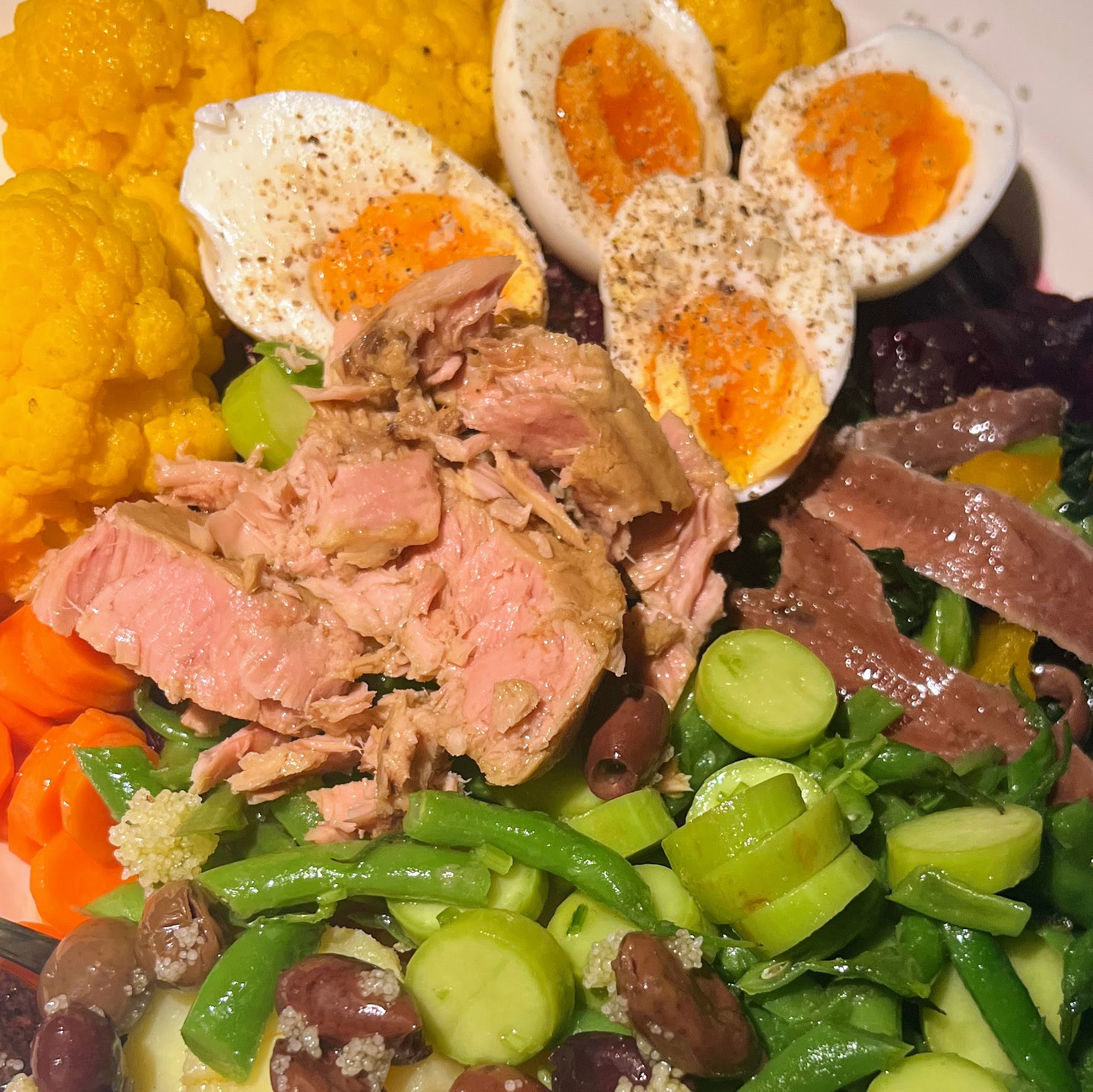
Ingredients
| Preparation | Vegetables and base | Fish | Eggs and olives | Dressing |
|---|---|---|---|---|
| Salade niçoise | Tomatoes, sweet green pepper, spring onions, celery heart, radishes; very young broad beans and small raw artichokes in season | Anchovies; tuna in olive oil in the contemporary composition | Hard-boiled eggs, black Niçoise olives | Olive oil, basil, garlic rubbed over the plate |
| Cundigiun | Tomatoes, cucumber, pepper, onion or spring onions; ship’s biscuits soaked in water, preferably the juice released by the tomatoes, to form the base of the dish | Anchovies and, depending on the version, tuna | Taggiasca olives; hard-boiled eggs in richer compositions | Olive oil, garlic, basil, often oregano |
| Insalata nizzarda | Tomatoes and salad leaves, with boiled potatoes and green beans | Tuna, often anchovies | Hard-boiled eggs, black olives | Olive oil; dressing varies |
| Cundigiun with boiled vegetables | Potatoes, green beans, carrots, beetroot, cauliflower and onion, or leek; all cooked | Tuna in olive oil | Hard-boiled eggs, Taggiasca olives | Extra virgin olive oil, salt and pepper |
| Cappon magro | Ship’s biscuits; potatoes, green beans, carrots, beetroot and cauliflower, cooked separately | White fish; prawns and other seafood optional | Hard-boiled eggs and olives, to finish | Salsa verde; water and a little vinegar to soak the biscuits |
| Grand aïoli | Potatoes, carrots, cauliflower, green beans and other seasonal vegetables, cooked | Desalted salt cod; whelks optional | Hard-boiled eggs | Aïoli sauce served separately |
The distinctions to preserve
Salade niçoise. The defining point is the absence of boiled vegetables: no potatoes and no green beans. Here I choose a composition without salad leaves, lemon or vinegar, with just olive oil to mingle with the tomato juices. This is an essential version: some Niçoise codifications allow mesclun, cucumber and a little vinegar.
Cundigiun. A Ligurian salad with a variable composition, close to niçoise in its combination of raw vegetables, olives and preserved fish. Cucumber, Taggiasca olives and oregano characterise many versions. Potatoes and green beans may appear, but they do not define it on their own.
Insalata nizzarda. The name commonly used for a composition combining raw and cooked vegetables. Boiled potatoes and green beans are its most recognisable elements; salad leaves often appear.
Cundigiun with boiled vegetables. Here the name identifies the version encountered in Liguria, without attributing a single or codified recipe to it. No raw vegetables; boiled onion, or leek, alongside the other vegetables. Tuna, eggs and Taggiasca olives remain.
Cappon magro. A layered Ligurian preparation: ship’s biscuits at the base, cooked vegetables and fish, bound together with salsa verde. Compositions can become rich and elaborate, with crustaceans and other seafood. Here I propose a restrained version, keeping the structure and dressing recognisable.
Grand aïoli. Aïoli is the sauce; grand aïoli is the complete dish of cooked vegetables, fish and eggs. The reference fish is morue, meaning desalted salt cod. Bulots, or whelks served in their shells, may accompany it.
Method
Salade niçoise — everything raw, except the eggs
Rub a large plate with a cut clove of garlic. Cut the tomatoes into wedges and lightly salt them. Thinly slice the pepper, spring onions, celery heart and radishes, then arrange over the tomatoes.
In season, add very tender young broad beans and small artichokes, trimmed and thinly sliced.
Finish with anchovies, large pieces of tuna, olives and quartered hard-boiled eggs. Add basil and olive oil just before serving, keeping the ingredients distinct.
Cundigiun — the vegetables are mixed
Soak the ship’s biscuits in water, preferably the juice released by the tomatoes, and arrange at the base of the dish.
Cut the tomatoes, cucumber and pepper; thinly slice the onion or spring onions. Combine with Taggiasca olives, anchovies and a lightly crushed clove of garlic.
Dress with olive oil, basil and a little oregano. Mix gently, then add tuna and hard-boiled eggs if desired. Remove the garlic before serving.
Insalata nizzarda — raw and cooked together
Boil the potatoes and green beans separately. Leave to cool, then cut the potatoes and combine with the beans, tomatoes and salad leaves, washed and thoroughly dried.
Dress and finish with tuna, anchovies, olives and hard-boiled eggs.
Cundigiun with boiled vegetables — the vegetables change
Cook the potatoes, green beans, carrots, cauliflower and onion separately. Use ready-cooked beetroot or boil it separately.
Cut the onion into wedges and cook until tender, retaining its shape. Alternatively, use leek: choose the white and pale green parts, wash thoroughly and cut into short lengths before cooking.
Drain all the vegetables well and leave to cool slightly. Peel and cut the potatoes, slice the carrots and cut the beetroot into wedges or cubes.
Arrange on a large plate and dress with olive oil, salt and pepper. Finish with large pieces of tuna, Taggiasca olives and hard-boiled eggs. Add the beetroot last, mixing as little as possible.
Cappon magro — the dish is built in layers
Cook the potatoes, green beans, carrots, cauliflower and beetroot separately, keeping each vegetable firm. Drain and leave to cool.
Gently cook the white fish, then remove the skin and bones and divide into large pieces. If using prawns, cook them separately too.
Make a salsa verde with parsley, a little garlic, desalted capers, anchovies and bread crumb soaked in vinegar and squeezed out thoroughly. Pound or chop finely, then incorporate extra virgin olive oil to make a supple sauce.
Briefly soak the ship’s biscuits in water with a little vinegar: they should soften while retaining their structure. Arrange at the base of the dish and spread with a little salsa verde.
Layer the vegetables and fish, alternating with the sauce. Finish with hard-boiled eggs, olives and prawns, if using. Add the beetroot carefully to keep its colour distinct.
Leave to rest in the refrigerator for a few hours and take out shortly before serving.
Grand aïoli — the dressing becomes a sauce
Cook the vegetables separately and drain well. Cook the desalted salt cod in barely simmering water, without a vigorous boil, until the flesh flakes easily.
For the sauce, pound the garlic with a little salt in a mortar until it forms a paste. Incorporate the egg yolk and gradually add olive oil, first drop by drop, then in a thin stream, working continuously to obtain a thick emulsion.
As a guide, use one egg yolk, one or two cloves of garlic and 120–150 ml of mild extra virgin olive oil.
Arrange the fish on a large plate with the vegetables and quartered hard-boiled eggs around it. Add cooked whelks in their shells if desired. Serve the sauce separately.
Tips
- Raw vegetables: choose flavourful tomatoes, sweet peppers and the tender parts of celery, artichokes and young broad beans.
- Cooked vegetables: respect each vegetable’s cooking time. Potatoes that hold together, green beans still firm, cauliflower that retains its shape; onion and leek tender without falling apart.
- Temperature: serve the salads at room temperature; the vegetables and fish for grand aïoli can be lukewarm.
- Salt: allow for the saltiness of anchovies, olives, tuna and salt cod.
- Beetroot: add it last to keep its colour distinct.
- Aïoli: choose a mild olive oil and adjust the garlic according to its strength.
- Whelks: serve with small seafood picks or forks to extract them from their shells.
- Cappon magro biscuits: moisten just enough; the base should support the dish without falling apart.
- Salsa verde: spread it between the layers too, adjusting salt and vinegar to the anchovies and capers.
Variations
Cappon magro can remain simple, with just one fish, or be enriched with crustaceans and other seafood. More than the number of ingredients, what matters is the balance between base, vegetables, fish and sauce.
Young broad beans and artichokes follow the niçoise season. The vegetables for cundigiun follow the garden and household habits.
Broccoli and turnips can be included in the boiled-vegetable composition. Onion or leek provides a sweet note alongside tuna, eggs and olives.
For grand aïoli, steamed fresh cod is an alternative to salt cod. Whelks are optional; other molluscs may also appear.
Aïoli can be an emulsion of garlic and olive oil alone. The preparation with egg yolk given here is also widespread in Provence.